
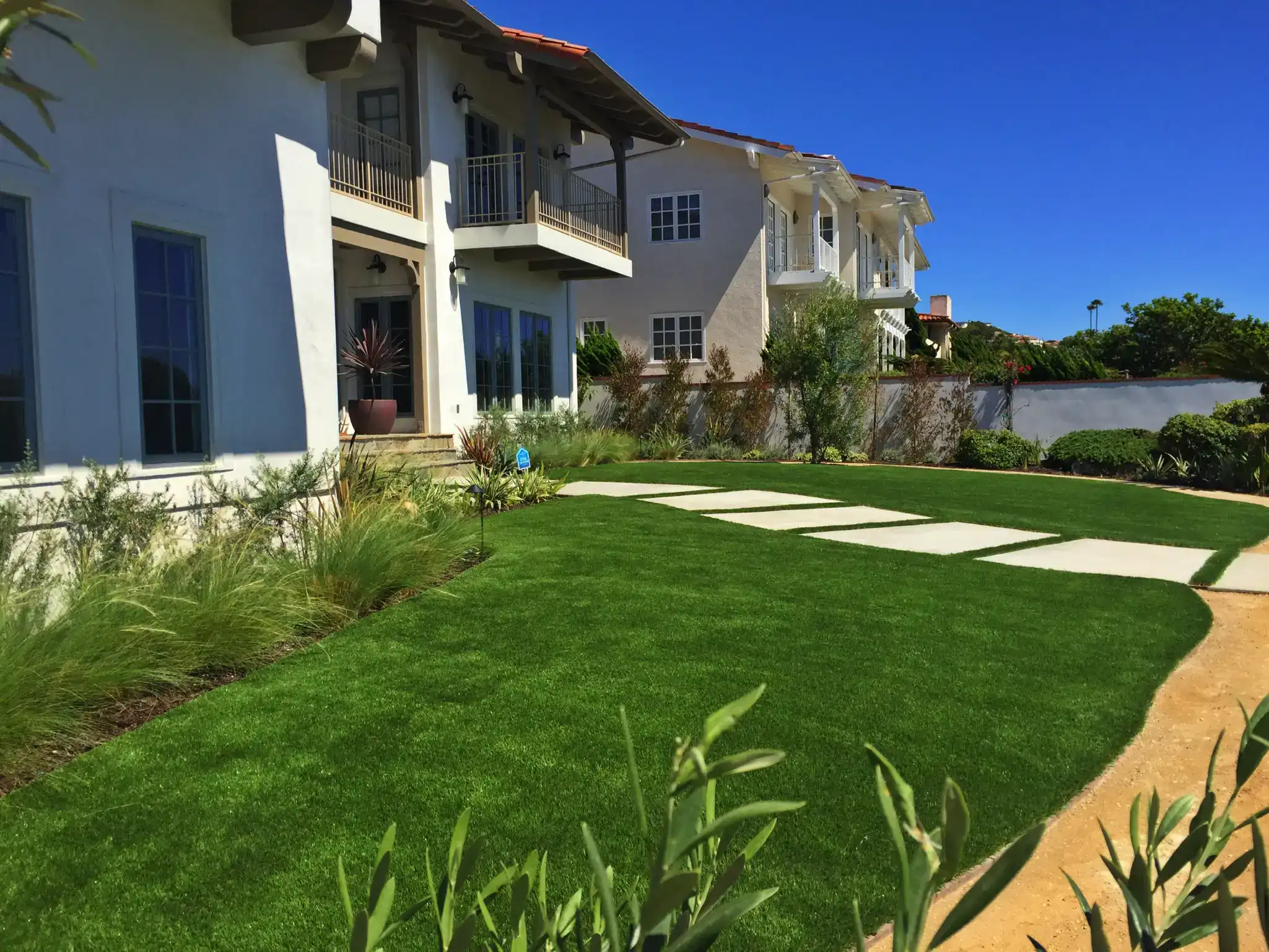
Artificial turf has become one of the most popular outdoor upgrades for homeowners in Corona and throughout the Inland Empire. With year-round curb appeal, reduced maintenance, and no watering schedules to manage, it’s easy to understand why more homeowners are making the switch.
What many people don’t realize is that artificial turf installation is far more technical than it looks. We regularly see DIY installations and low-cost installs that develop drainage issues, visible seams, uneven surfaces, odors, or premature failure. In many cases, fixing these mistakes costs more than hiring a professional from the start.
Below are the most common turf installation mistakes we see on real service calls, based on our experience installing artificial grass throughout Southern California.
1. Skipping Proper Base Preparation
The Foundation Matters More Than the Turf
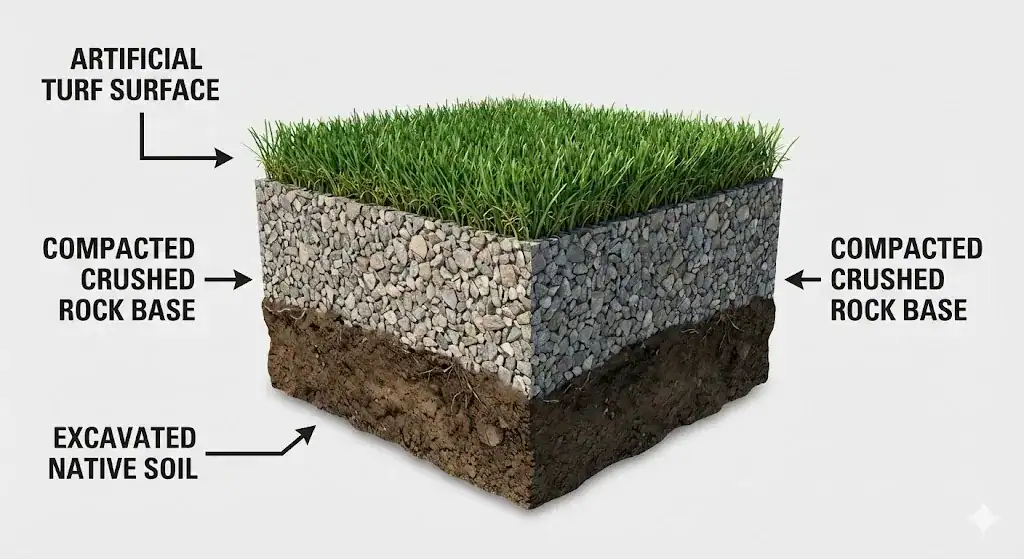
The base is the backbone of any artificial turf installation. If it is uneven, too soft, or improperly compacted, the turf will eventually shift, ripple, sink, or buckle.
Local Soil Conditions Homeowners Often Underestimate
Soil conditions in Corona, Eastvale, Riverside, and nearby cities vary widely. Many areas have clay-heavy or unstable soil that requires more preparation than homeowners expect.
Common issues we see include:
- Not removing enough existing soil
- Using the wrong base materials
- Skipping proper compaction
- Leaving soft or uneven areas beneath the turf
These problems rarely show up immediately, but they almost always appear within the first few months.
Even the best turf products cannot perform well without a properly prepared foundation. This is why professional artificial grass installation always starts below the surface.
2. Poor Grading and Drainage Planning
Drainage Challenges in Inland Empire Yards
Many homes in the Inland Empire sit on flat pads or clay-heavy soil that holds moisture. Without proper grading, water can become trapped beneath the turf.
Long-Term Problems From Poor Drainage
Improper drainage can cause turf to:
- Bubble or lift
- Develop odors
- Discolor
- Form soft or unstable areas
Drainage issues are one of the most common reasons homeowners contact us for turf repairs or replacements.
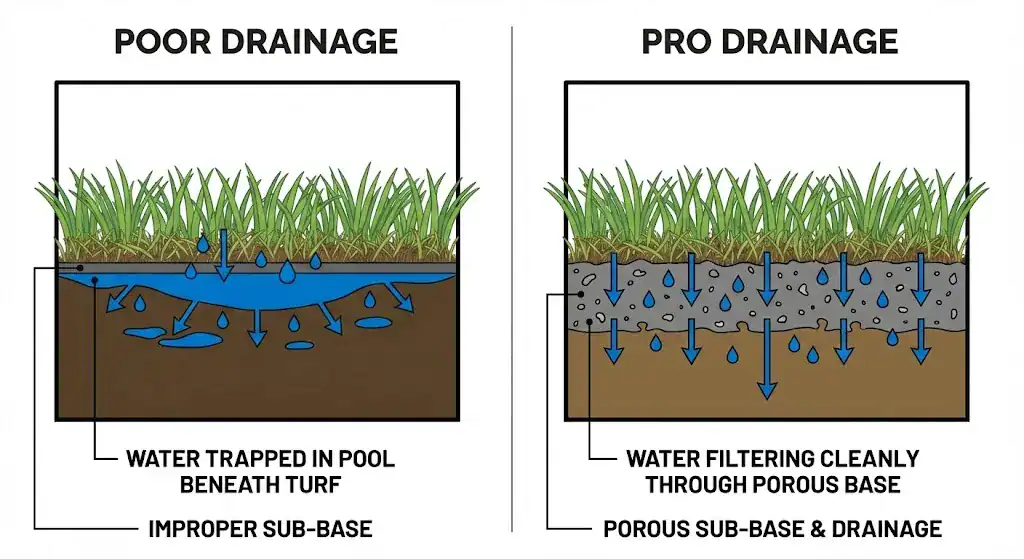
How Drainage Is Handled Professionally
Proper installations include grading, compacted base layers, and drainage planning tailored to the property. In moisture-prone areas like Norco, Chino, and Menifee, this step is critical for long-term performance.
Don’t Risk a Costly Redo
A bad turf install can cost twice as much to fix as it does to do right the first time. Save yourself the stress and get a professional breakdown of your yard specific needs from soil composition to drainage.
3. Incorrect Turf Seaming
Why Seams Require Experience
Seaming is one of the most skill-intensive parts of turf installation. Small alignment errors can make seams permanently visible.
Heat Expansion in Southern California
Artificial turf expands and contracts with temperature changes. In hot Inland Empire summers, improper seam spacing can lead to gaps, wrinkles, or raised edges.
How Professionals Create Invisible Seams
Experienced installers use:
- Correct seam tape and adhesive
- Proper blade angles
- Grain alignment
- Controlled tension
When done correctly, seams blend naturally into the lawn and disappear visually.
4. Using the Wrong Infill Material
Why Infill Plays a Major Role
Infill affects how turf feels, drains, and holds its shape. Using the wrong infill can:
- Make turf feel hard underfoot
- Trap heat
- Cause uneven wear
- Reduce drainage performance
Pet Odor Problems From Poor Infill Choices
Infill that absorbs moisture can trap pet odors and become difficult to clean over time.
What We Use Instead
Professional-grade infill is selected to:
- Improve drainage
- Reduce heat retention
- Help manage pet odors
- Support long-term stability
These details make a noticeable difference in how turf performs over the years.
5. Ignoring Edging, Perimeters, and Expansion Space
Why Edging Is Not Optional
Without proper edging, turf can shift, curl, or lift at the edges. This can create visible gaps and potential trip hazards.
Inland Empire Conditions Put Extra Stress on Edges
High heat, direct sun, and temperature swings put pressure on turf perimeters. Without a secure edge system, movement is almost guaranteed over time.
How Turf Is Secured Professionally
Depending on the project, edging systems may include:
- Bendable boards
- Treated lumber
- Concrete or hardscape borders
These systems keep turf locked in place and protect the overall installation.
Bonus: DIY Installations Often Void Manufacturer Warranties
Many turf manufacturers require professional installation for warranty coverage. Even small installation errors can void protection, leaving homeowners responsible for replacement costs.
Professional installation protects both the product and your investment.
Why Working With a Local Specialist Makes a Difference
As a family-owned company, we’ve installed turf across Corona, Riverside County, San Bernardino County, and Orange County. We understand the real conditions homeowners face, including soil composition, heat exposure, drainage challenges, slopes, and HOA requirements.
Unlike contractors who outsource work or unlicensed installers who cut corners, our team handles projects directly and focuses on craftsmanship and accountability. Our installations include:
- Proper site evaluation
- Correct soil removal and base preparation
- Grading and drainage planning
- Clean, consistent seam work
- High-quality infill selection
- Professional edging systems
Explore our complete outdoor living transformations
A Better Way to Install Turf From the Start
Artificial turf is a long-term investment. Avoiding common installation mistakes saves time, money, and frustration.
If you’re considering turf for your home, working with experienced installers who understand local conditions makes all the difference. Our goal is always to do the work right the first time, because our name is on every project.
If you’d like to explore options or ask questions, we’re always happy to start with a conversation through our Contact Us page.
Artificial Turf Installation FAQs
Yes. Turf installation involves precise base preparation, drainage planning, and seam work. Small mistakes can lead to costly repairs.
Poor base preparation. It causes sinking, wrinkles, dips, and uneven surfaces over time.
Without proper drainage, water becomes trapped and can lead to odors, mold, and soft spots, especially in hot climates.
Typically no. Existing soil usually needs to be removed and replaced with proper base materials, then compacted correctly.
Yes. Infill supports the turf blades, improves stability, aids drainage, and can help reduce heat and pet odors.
Yes. Improper seams create visible lines, gaps, and safety concerns.
Absolutely. Professional installation prevents common failures, protects warranties, and ensures long-term performance.