When it comes to patios, driveways, and outdoor living spaces in Southern California, two materials dominate every conversation: interlocking pavers and concrete. They both look great on day one. They’re both durable. And depending on who you talk to, each one is “the better choice.”
So which is actually right for your home?
After 17 years and hundreds of hardscape projects across Orange County, Riverside County, and San Bernardino County, our team at Ecoworkz has installed both. We’ve also spent years fixing the ones that failed and it’s almost always the same material that causes problems.
This guide gives you a straight comparison: cost, durability, maintenance, and long-term value all with SoCal’s specific conditions in mind. No fluff. No sales pitch. Just the information you need to make the right call for your project.
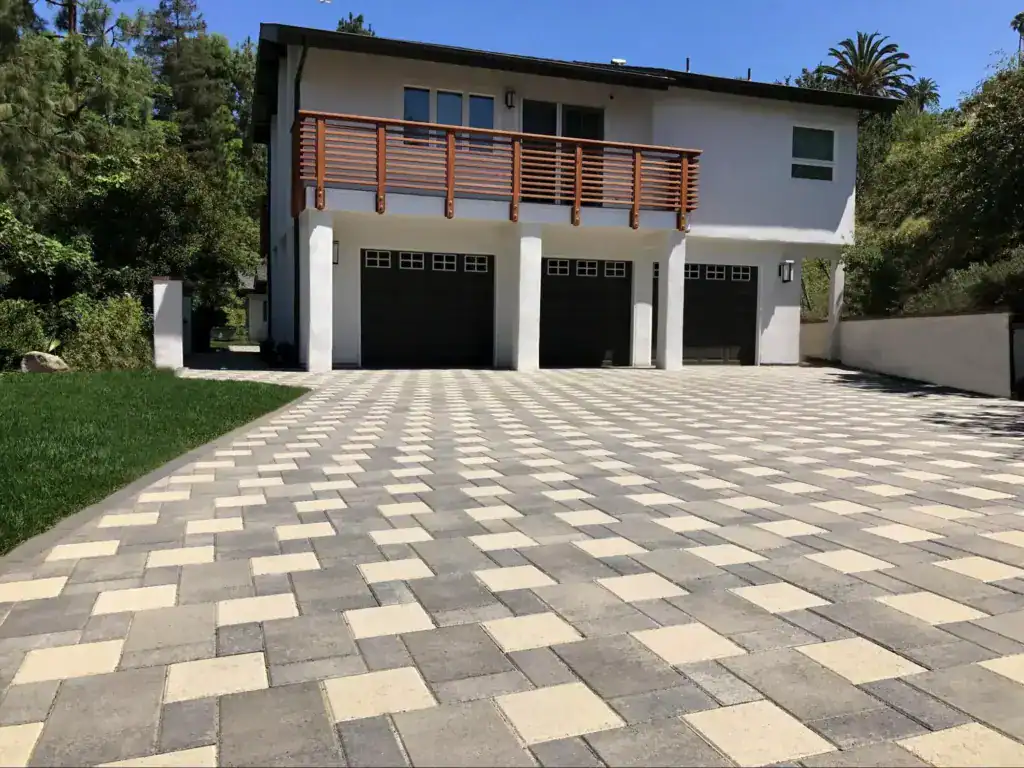
Pavers vs. Concrete: Side-by-Side Comparison
Here’s the short version before we go deeper. This table covers the factors that matter most to homeowners in Southern California.
| Factor | Interlocking Pavers | Concrete (Poured or Stamped) |
|---|---|---|
| Upfront Cost | $18–$24+ per sq ft (materials + labor) | $10–$15 per sq ft (plain to stamped) |
| Lifespan | Lifetime in most cases | 20–30 years before major issues |
| Maintenance | Occasional re-sanding, periodic sealing (optional) | Seal every 2–3 years; patch cracks as they appear |
| Repairability | Easy lift and replace individual pavers | Difficult patches are visible; full sections may need replacement |
| Heat Resistance | Handles SoCal heat well; joints allow thermal expansion | UV degrades sealant; can crack in heat cycles |
| Aesthetics | Wide variety of colors, patterns, and materials (travertine, porcelain, stone) | Broad options when new; fades and stains over time |
| HOA Compliance | Typically approved; modifications are easier | Generally approved but changes are harder to reverse |
| Home Resale Value | Strong curb appeal; premium perceived value | Adds value but less impact than pavers in SoCal market |
| Best For | Patios, pool surrounds, driveways, walkways, entertainment areas | Budget-conscious flat surfaces; large commercial areas |
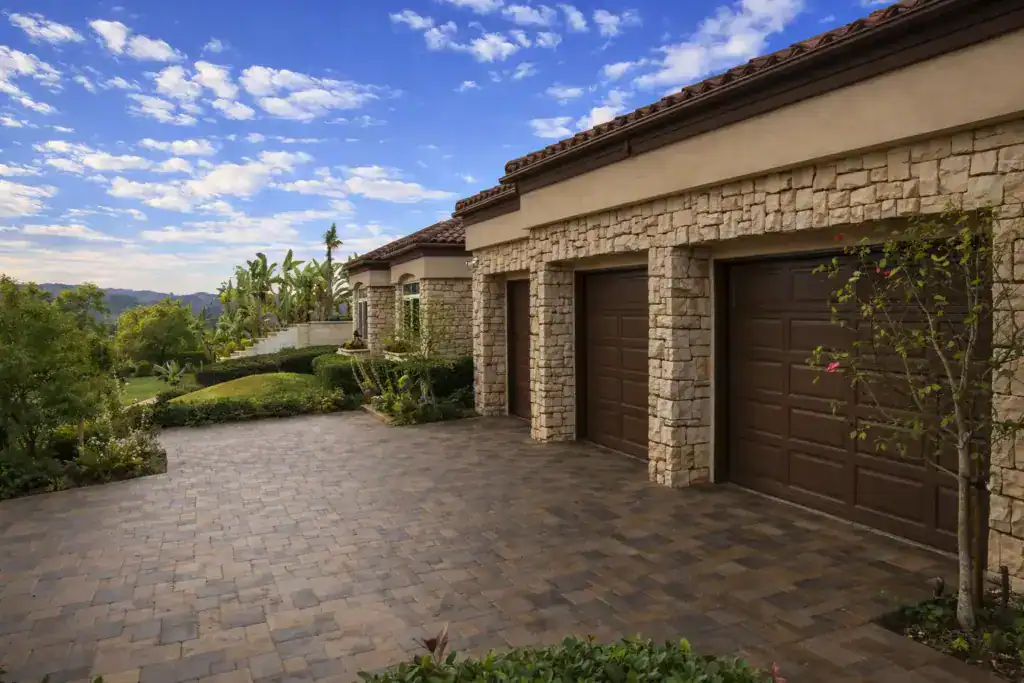
What Are Interlocking Pavers?
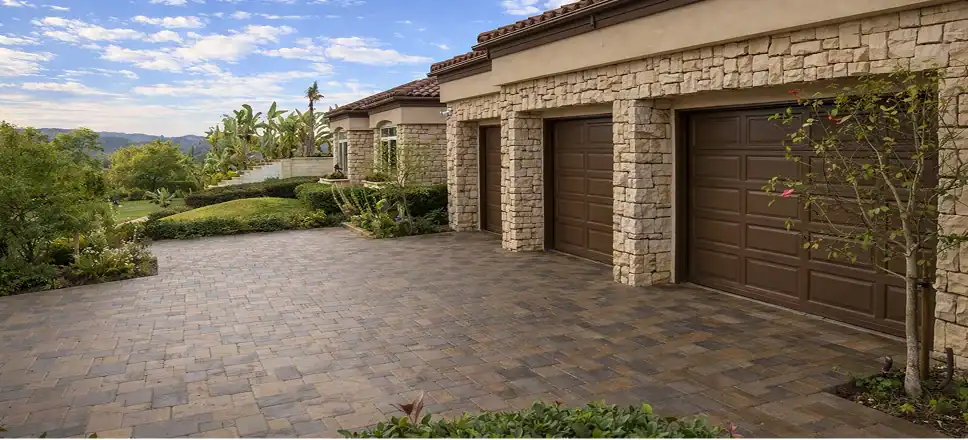
Interlocking pavers are individual blocks made from concrete, natural stone, travertine, porcelain, or tumbled stone that are laid in a sand base and fit together without mortar. The “interlocking” part is key: each paver is slightly gapped at the edges, meaning they transfer load between one another rather than acting as one rigid slab.
That flexibility is what makes them so well-suited to Southern CA. Our region has clay-heavy soils that expand and contract with moisture changes, plus seismic activity that causes ground movement year-round. A mortar-set surface cracks under that pressure. Pavers flex with it.
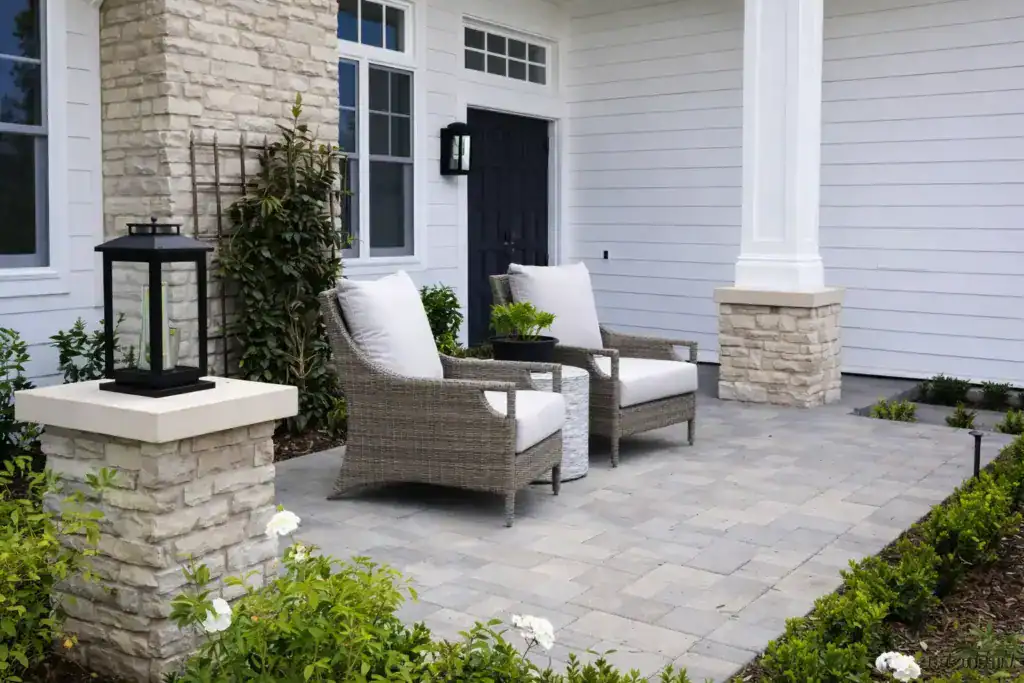
Common paver materials available in SoCal include:
- Concrete pavers the most affordable option, available in dozens of colors and profiles
- Travertine a natural stone with a refined, timeless look popular around pools and patios
- Porcelain extremely durable and stain-resistant, ideal for high-traffic areas
- Tumbled stone and slate for a natural, old-world aesthetic
At Ecoworkz, we install all paver types and help homeowners select the right material for their design goals, budget, and maintenance preferences.
What Is Concrete? And Why It’s Popular
Poured concrete has been the go-to patio and driveway material for decades and for good reason. It’s fast to install, relatively inexpensive upfront, and requires no complex base preparation beyond a gravel sub-base and formwork.
Stamped concrete takes that further by pressing decorative patterns into wet concrete to mimic the look of pavers, slate, or stone. On day one, stamped concrete can look remarkably similar to pavers and at a lower price point.
The problems start later. SoCal’s intense UV exposure degrades concrete sealant faster than in other climates, meaning you’re re-sealing every two to three years or watching the surface fade and stain. Clay soils cause cracking. When a concrete slab cracks, visible repairs are nearly unavoidable.
None of this makes concrete a bad material; it has real use cases. But for residential patios, driveways, and entertainment areas, we see its limitations play out constantly.
Pavers vs. Concrete Cost: The Real Numbers
Cost is usually the first question homeowners ask, and it’s where concrete appears to win on paper. Here’s what the actual numbers look like in Southern California:
| Factor | Interlocking Pavers | Concrete (Stamped) |
|---|---|---|
| Materials + Labor | $18–$24+ per sq ft | $11–$15 per sq ft |
| Sealing (per cycle) | Optional / $0.50–$1.50/sq ft | Required every 2–3 yrs / $1–$3/sq ft |
| Crack Repair (10 yr) | Replace individual pavers low cost | Patch work visible; full section = $$$ |
| 10-Year Cost Outlook | Higher upfront, lower maintenance cost | Lower upfront, higher ongoing maintenance |
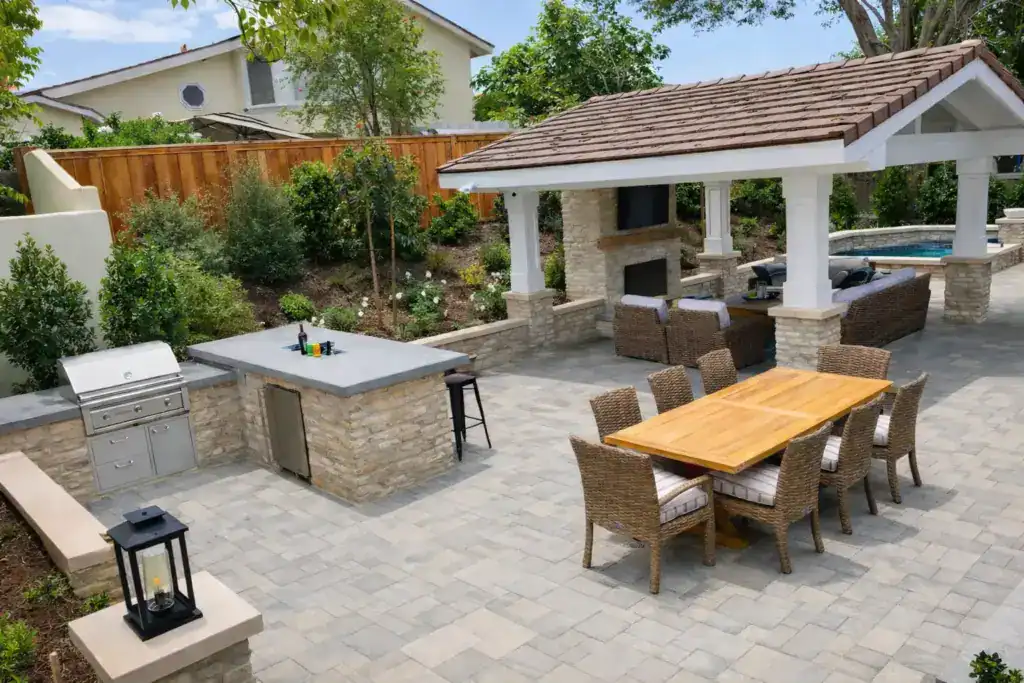
The upfront gap between pavers vs concrete cost is real pavers require more labor-intensive base preparation (proper excavation, graded compaction, and sand bedding) that adds to installation time. But over 10 years, the cost of sealing, patching, and eventually resurfacing concrete brings the two much closer than the initial quote suggests.
Ecoworkz provides all-inclusive, flat-rate quotes with no hidden fees or surprise charges. We’ll tell you exactly what you’re getting including material grade, base depth, and edge restraint type before any work starts.
| Get a Free Paver Estimate From Ecoworkz. Serving Orange County, Riverside County & San Bernardino County. No pressure, no gimmicks, just a straight quote and real samples to touch and compare. Call us or schedule your free on-site consultation at ecoworkz.net |
Durability & Longevity in SoCal’s Climate
Southern California is harder on hardscape materials than most homeowners realize. Intense UV exposure, dramatic temperature swings between day and night, expansive clay soils, and occasional seismic activity all stress outdoor surfaces.
Here’s how pavers and concrete handle those conditions:
Heat and UV
Concrete relies on a topical sealant for color protection. In SoCal, that sealant breaks down faster than in moderate climates; most homeowners need to re-seal every two to three years to prevent fading and surface staining. Stamped concrete shows its age here first: the pattern becomes less distinct, and color fades unevenly.
Pavers, by contrast, have color integrated into the material not applied on top. Concrete pavers use through-body pigment; travertine and natural stone are inherently colorfast. They don’t depend on a sealant layer to look good long-term.
Soil Movement and Cracking
Clay soils are the enemy of poured concrete. When soil swells with moisture and contracts in dry periods which is a twice-yearly pattern across Riverside and Orange Counties rigid concrete slabs crack. Those cracks spread, collect dirt, and are expensive to repair invisibly.
Interlocking pavers are designed to move. The sand bed beneath them absorbs minor ground shifts, and individual pavers can flex slightly relative to their neighbors. If a section does shift, we lift the affected pavers, re-grade the base, and reset them with no visible patch, no starting over.
Pool Surrounds: A Common Failure Point
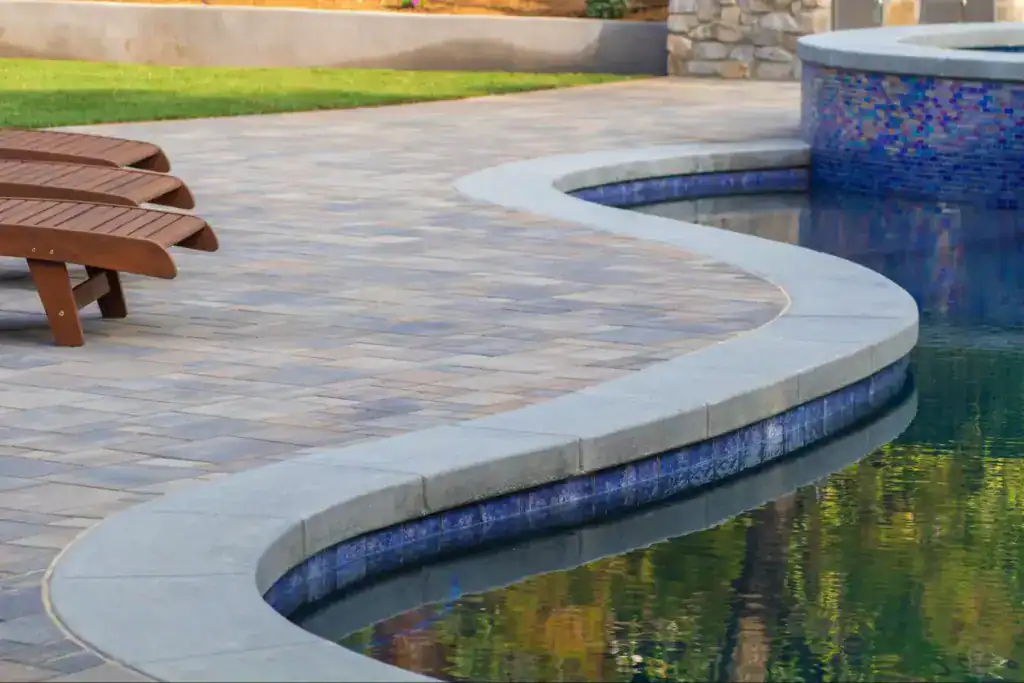
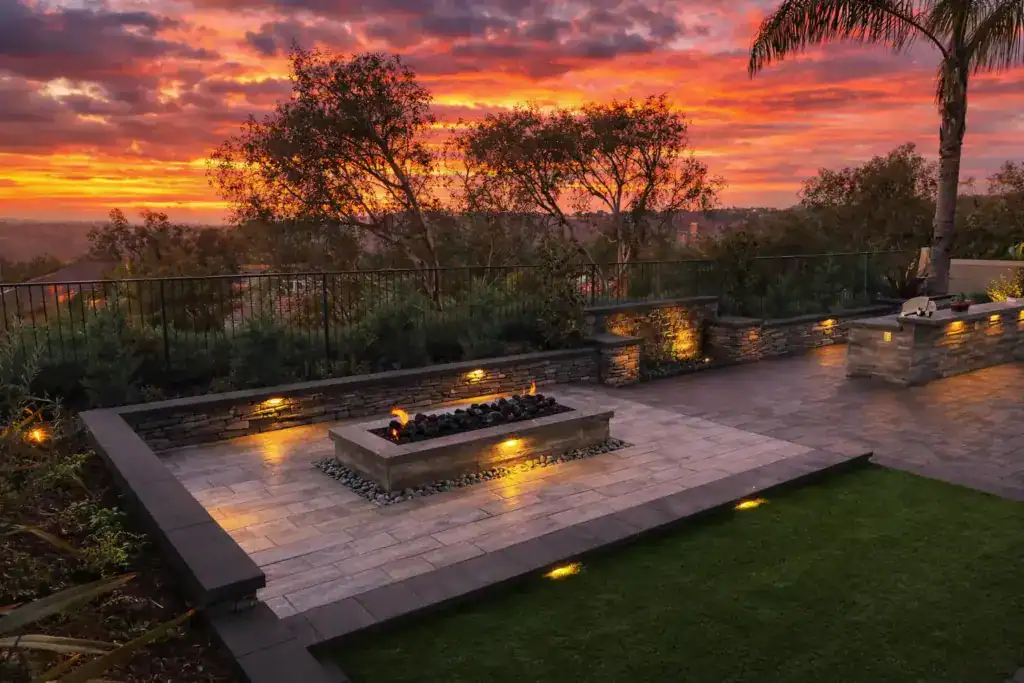
Pool decks are one of the most common places we see concrete fail early. Pool chemicals splash, UV is relentless, and the constant moisture cycles accelerate sealant breakdown and cracking. We see stamped concrete pool decks showing major wear at the 5–8 year mark. Paver pool surrounds routinely last 20+ years in the same conditions.
Maintenance Requirements: What You’re Signing Up For
Maintenance is where the long-term value calculation becomes clearest.
Concrete maintenance
To protect a concrete patio or driveway in Southern California, you need to:
- Seal the surface every 2–3 years (more frequently in high-UV areas or near pools)
- Treat stains quickly unsealed or degraded concrete absorbs oil, rust, and organic stains
- Patch cracks as they form, accepting that repairs will be visible
- Budget for partial or full resurfacing every 10–15 years if the surface is heavily stamped or decorative
Paver maintenance
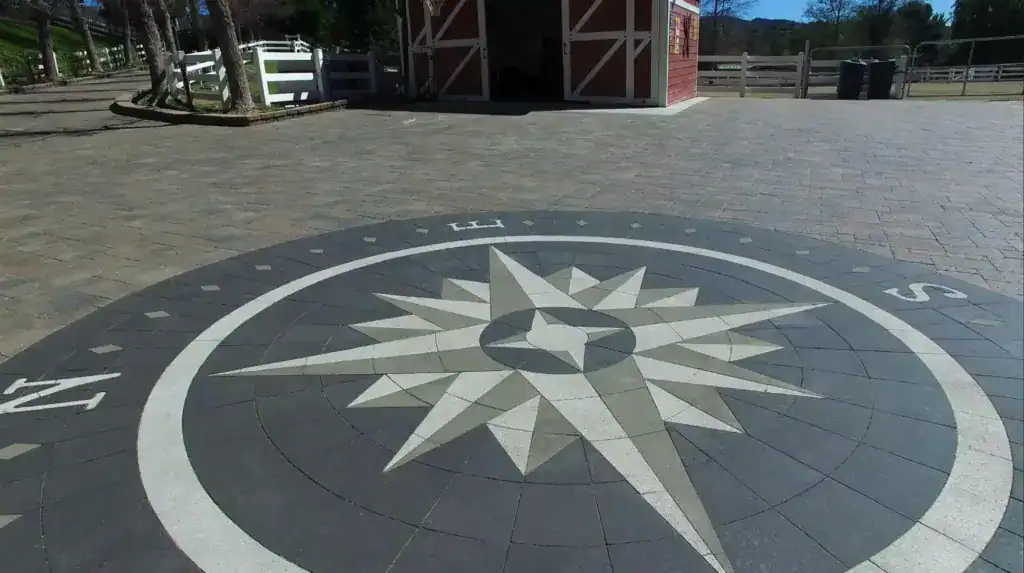
Paver maintenance is more periodic than ongoing:
- Re-sand joints every 5–7 years (or after heavy erosion events)
- Seal the surface if you want enhanced color and stain resistance optional, not required
- Replace individual pavers if they chip, stain, or shift no contractor required for simple fixes
- Brush and wash as needed pavers are easy to clean without special products
Over a 15-year ownership period, most homeowners with pavers spend significantly less on upkeep than those with concrete, even accounting for the higher installation cost.
Stamped Concrete vs. Pavers: A Closer Look
A common question we get: “What about stamped concrete? It looks just like pavers but costs less.”
That observation is accurate on day one. Stamped concrete can be pressed to mimic slate, cobblestone, travertine, and even brick patterns. When freshly installed and sealed, it can look nearly identical to real pavers in photos.
The difference shows up over time:
- Year 1–3: Both look great. Stamped concrete has a slight edge on surface smoothness.
- Year 3–7: Stamped concrete starts fading unevenly. The pattern lines begin to look washed out. UV is doing its work.
- Year 7+: Cracks appear, often along the stamped “joints” the same lines meant to mimic real paver gaps. Patch repairs are visible because the original color and texture can’t be exactly matched.
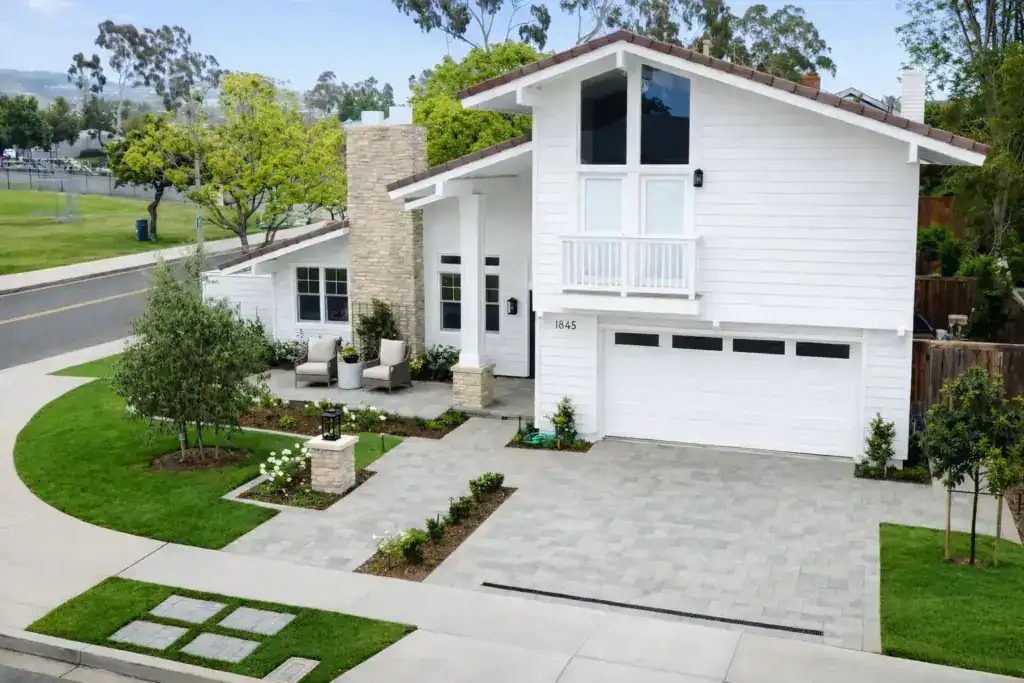
Real interlocking pavers age gracefully. The color in natural stone actually develops character over time. Even concrete pavers, which can fade slightly, maintain a consistent appearance because each unit fades at the same rate.
The cost gap between stamped concrete and entry-level pavers is smaller than most homeowners expect. When you factor in the maintenance difference, pavers are the stronger long-term value for most SoCal residential projects.
When Should You Choose Pavers?
Pavers are the right choice for most residential hardscape projects in Southern California. Specifically, they make the most sense when:
- You’re installing a patio, pool surround, driveway, walkway, or outdoor entertainment area
- You want a surface that will look great in 15 years without major restoration work
- HOA compliance matters pavers are typically approved and easy to document
- Resale value is a priority pavers photograph beautifully and appeal to buyers
- You want design flexibility material choices, patterns, and border accents that concrete can’t replicate
When Does Concrete Make More Sense?
Concrete is not the wrong choice in every scenario. It makes more sense when:
- Budget is the primary constraint and long-term maintenance is acceptable
- The application is structural footings, retaining wall bases, foundation work where concrete’s rigidity is an asset
- The surface is a large commercial area where aesthetic variation is less important
At Ecoworkz, we install pavers and concrete. But we’ll be honest with you: for residential patios and driveways in Orange County and Riverside County, our customers almost always choose pavers once they understand the full cost-of-ownership picture.
Why Southern California Homeowners Choose Ecoworkz
| 17+ Years in Business | Thousands of Projects Completed |
| Founded in Corona, CA during Southern California’s worst drought we’ve understood water-conscious outdoor design from day one. | In-house crews only. No subcontractors. The same team that quotes your job builds it. |
| No-BS Pricing | 4.6+ Star Rating |
| Flat-rate, all-inclusive quotes. No hidden fees, no artificial urgency, no gimmick discounts. | Consistently rated across Google, Yelp, and Facebook for professionalism, communication, and clean jobsites. |
We’re fully licensed, bonded, and insured not because it’s required (though it is), but because it protects you. Unlicensed hardscape contractors are common in SoCal and leave homeowners with no recourse when work fails or permits aren’t pulled.
We also offer flexible payment options through GreenSky and Lyon Financial, including 0% Build Now, Pay Later options for qualified homeowners. If a paver project fits your goals but the upfront cost is a concern, we’ll walk you through the options.
| Ready to See What Pavers Look Like on Your Property? Visit our Corona showroom to touch and compare real paver samples, or schedule a free on-site consultation. We’ll bring samples to you. Schedule your free estimate at ecoworkz.net | View our project gallery |
Frequently Asked Questions
Pavers typically last a lifetime with normal maintenance; poured concrete averages 20–30 years before major issues. More importantly, individual pavers can be replaced without disturbing the rest of the surface. When concrete cracks and in SoCal’s clay soils, repairs are visible and expensive. That repair advantage alone makes pavers the longer-performing choice for most residential applications.
For most residential patios in Orange County and Riverside County, interlocking pavers are the best choice. They handle SoCal’s heat, UV exposure, clay soil movement, and occasional seismic activity better than concrete. They offer more design options and outperform concrete on long-term value. Travertine and concrete pavers are the most popular options in the region.
The upfront cost of concrete $11–$15/sq ft is typically lower than pavers $18–$24+/sq ft. However, stamped concrete requires sealing every 2–3 years to maintain color and prevent cracking, and crack repairs are highly visible. Over a 10-year period, the cost gap between stamped concrete and entry-level pavers narrows significantly when maintenance is factored in.
Paver installation in Orange County typically ranges from $18 to $24+ per square foot, depending on the material (concrete pavers vs. travertine vs. porcelain), project complexity, and site conditions. At Ecoworkz, we provide all-inclusive quotes that cover material, base preparation, labor, and edge restraints with no add-ons after the fact. We offer free on-site estimates.
Yes, pavers can be installed over an existing concrete slab in many cases using a technique called “paver overlay.” This can reduce labor costs by eliminating demolition. However, it only works if the existing concrete is in good structural condition and the grade is good with no major cracks or heaving. Our team will evaluate your existing slab during the consultation and recommend the best approach.
In most cases, yes. Interlocking pavers are widely accepted by HOAs in Orange County and Riverside County communities. Some HOAs have material, color, or pattern restrictions. Ecoworkz handles HOA documentation and approval coordination as part of our project process. We’ve completed hundreds of HOA-compliant paver projects across the region.
The Bottom Line
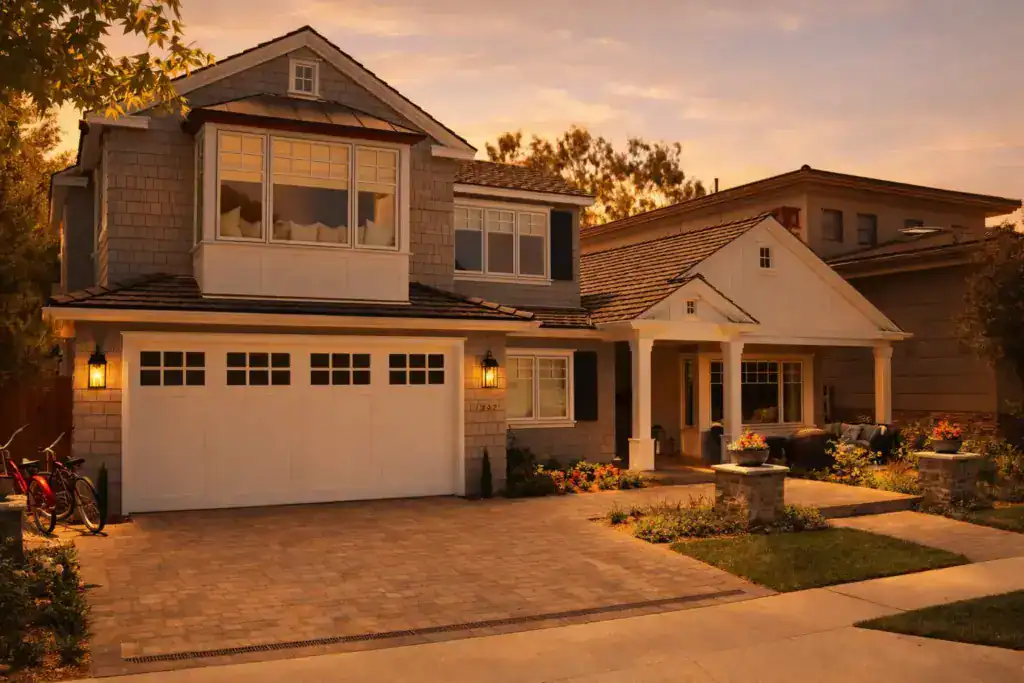
Pavers and concrete are both legitimate options for Southern California hardscape. But when you factor in SoCal’s specific climate, clay soils, UV intensity, and the real 10-year cost of ownership, interlocking pavers deliver better durability, lower maintenance burden, and stronger long-term value for the overwhelming majority of residential projects.
The upfront cost is higher. The results last longer and look better doing it.
If you’re weighing pavers vs. concrete for your patio, driveway, pool surround, or outdoor living space we’re happy to walk you through the numbers specific to your project. No pressure, no guesswork. Just honest advice from a team that has been doing this in Southern California for 17 years.
| Ready to Start Your Paver Project? Let’s Talk. Family-owned and based in Corona, CA. Serving Orange County, Riverside County, and San Bernardino County. Licensed, bonded, and insured. Call (714) 582-7800 | Schedule online at ecoworkz.net | Visit our showroom at 1100 Olympic Dr, Suite 101, Corona, CA |